
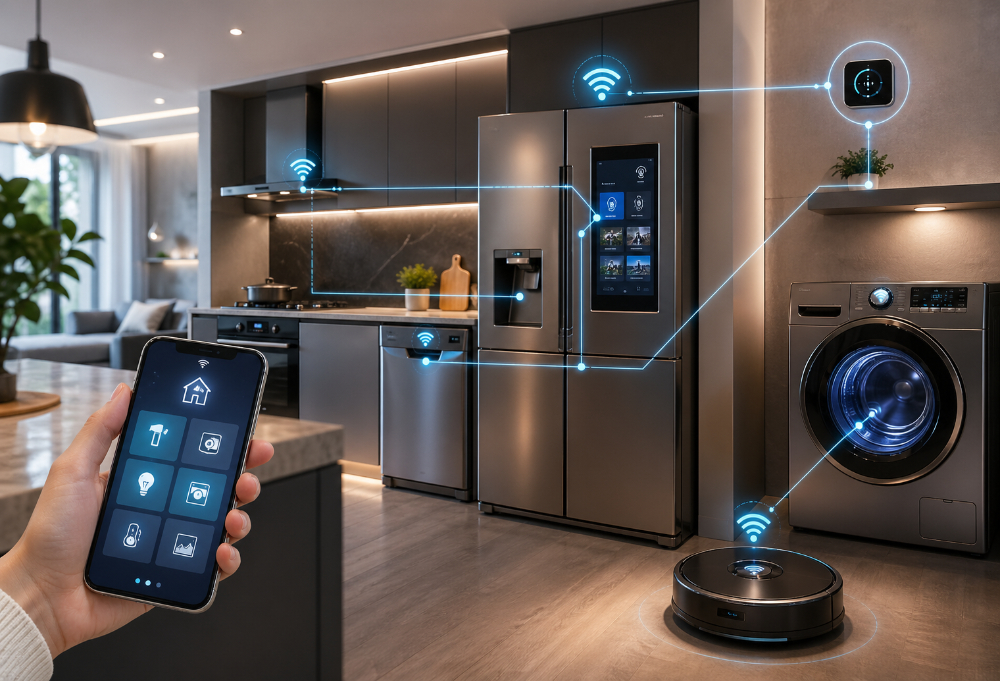
Technology has transformed nearly every corner of our daily lives, and the home appliance industry is no exception. From refrigerators that can order groceries to washing machines that diagnose their own problems, smart appliances have moved far beyond simple convenience features. They are now central to how homeowners manage energy, time, and household efficiency. As these devices become more common in homes across the country, including communities like Chino Valley, AZ, understanding how they work and what they mean for long-term maintenance becomes increasingly important.
For residents who rely on a trusted appliance repair company, the rise of smart technology also changes the nature of professional service. Technicians today must be equipped to handle not just mechanical failures but also software issues, sensor malfunctions, and connectivity problems. The intersection of traditional appliance repair and modern technology is where the future of home maintenance is taking shape.
How Smart Appliances Actually Work
At the core of every smart appliance is a combination of sensors, processors, and internet connectivity. These components work together to collect data, analyze performance, and communicate with users or service providers in real time. A smart refrigerator, for example, uses internal cameras and temperature sensors to monitor food inventory and cooling efficiency. A smart dishwasher might track water usage and adjust cycle lengths based on load size.
Most smart appliances connect to a home Wi-Fi network and communicate through a manufacturer’s mobile app. Users can receive alerts, adjust settings remotely, and even schedule maintenance from their smartphones. Some devices are compatible with voice assistants like Amazon Alexa or Google Home, allowing for hands-free control. The integration of these technologies creates a seamless experience that makes managing a household notably easier.
Behind the scenes, these appliances are collecting enormous amounts of data. Manufacturers use this information to improve future products, identify common failure points, and push over-the-air software updates that can fix bugs or improve performance without requiring a technician visit. This ongoing relationship between the appliance and the manufacturer represents a significant shift from traditional product ownership.
Smart Technology and Energy Efficiency
One of the most compelling benefits of smart appliances is their ability to reduce energy consumption in meaningful ways. Traditional appliances operate on fixed cycles and settings, regardless of whether those settings are necessary for a given load or situation. Smart appliances, by contrast, adjust their performance dynamically based on real-time conditions.
Smart washing machines can detect the weight of a laundry load and optimize water and energy use accordingly. Smart ovens can preheat more efficiently by learning a household’s cooking habits. Smart thermostats, which often work in tandem with HVAC systems, can reduce heating and cooling costs by learning when residents are home and adjusting temperatures automatically.
For homeowners in warmer climates, including those seeking appliance repair in Chino Valley, AZ, these energy-saving features carry real financial weight. Reducing electricity consumption during peak hours can lead to noticeable savings on monthly utility bills. Many utility companies also offer incentives for customers who use smart, energy-efficient appliances, making the upfront investment more worthwhile over time.
The environmental benefits are equally significant. As more households adopt smart technology, the cumulative reduction in energy use contributes to broader sustainability goals. Smart appliances are not just good for the wallet; they are also a practical step toward reducing a household’s carbon footprint.
The Impact on Appliance Repair and Maintenance
The arrival of smart technology has fundamentally changed what it means to maintain and repair a home appliance. In the past, a broken appliance typically meant calling a technician, describing vague symptoms, and waiting for a diagnosis. Today, many smart appliances can identify problems themselves and communicate error codes or diagnostic reports directly to the homeowner or a repair company.
This self-diagnostic capability speeds up the repair process considerably. When a smart appliance detects an issue, it can send an alert to the homeowner’s phone with a description of the problem and a recommended course of action. In some cases, the appliance can even contact a service provider automatically. For those in need of appliance repair in Chino Valley, AZ, this kind of proactive communication can mean the difference between catching a small issue early and dealing with a complete breakdown.
However, smart technology also introduces new complexities for repair professionals. A faulty sensor, a corrupted software update, or a lost Wi-Fi connection can cause an appliance to malfunction in ways that have nothing to do with its mechanical components. Technicians must now be trained in both the hardware and software aspects of modern appliances. A reputable appliance repair company invests in ongoing training to ensure its staff can handle the full range of issues that smart appliances present.
Replacement parts for smart appliances can also be more expensive and harder to source than parts for traditional models. Circuit boards, proprietary sensors, and connected control panels are specialized components that require careful handling. This reality makes choosing the right appliance repair company more important than ever, particularly as smart appliances become the standard rather than the exception.
Common Smart Appliance Problems Homeowners Should Know
Despite their advanced capabilities, smart appliances are not immune to problems. In fact, they introduce a category of issues that traditional appliances simply do not have. Connectivity problems are among the most common complaints. If a smart appliance loses its connection to the home network, it may stop responding to remote commands or fail to send diagnostic alerts. Restarting the router or re-pairing the device can sometimes resolve the issue, but persistent connectivity problems may point to a deeper hardware fault.
Software glitches are another frequent source of trouble. Manufacturers regularly push updates to smart appliances, and occasionally those updates introduce bugs that affect performance. A smart refrigerator might suddenly display incorrect temperature readings, or a smart oven might fail to respond to app-based commands after an update. In many cases, a factory reset or a manual software rollback can fix the problem, but some situations require professional intervention.
Sensor failures are also a known issue with smart appliances. These small but critical components are responsible for collecting the data that drives the appliance’s intelligent features. When a sensor fails, the appliance may operate inefficiently, display false error codes, or shut down entirely as a safety precaution. Diagnosing a sensor problem requires specialized tools and knowledge, which is why working with a qualified appliance repair company is essential.
Finally, compatibility issues can arise as smart home ecosystems evolve. An appliance purchased a few years ago may no longer be fully compatible with the latest version of a voice assistant or smart home hub. While manufacturers try to maintain backward compatibility through software updates, there are limits to how long older hardware can keep up with newer platforms. Homeowners should factor this lifecycle reality into their purchasing decisions.
Conclusion
Smart technology has brought remarkable improvements to modern appliances, offering greater efficiency, convenience, and self-diagnostic capabilities. At the same time, it has raised the bar for the kind of expertise required to service and maintain these devices properly. For homeowners in communities like Chino Valley, AZ, staying informed about how smart appliances work is the first step toward getting the most out of them. Partnering with a reliable appliance repair company that understands both the mechanical and technological dimensions of today’s appliances ensures that when problems arise, they are handled quickly and correctly. As smart technology continues to evolve, so too will the standard of care required to keep these powerful home systems running at their best.