
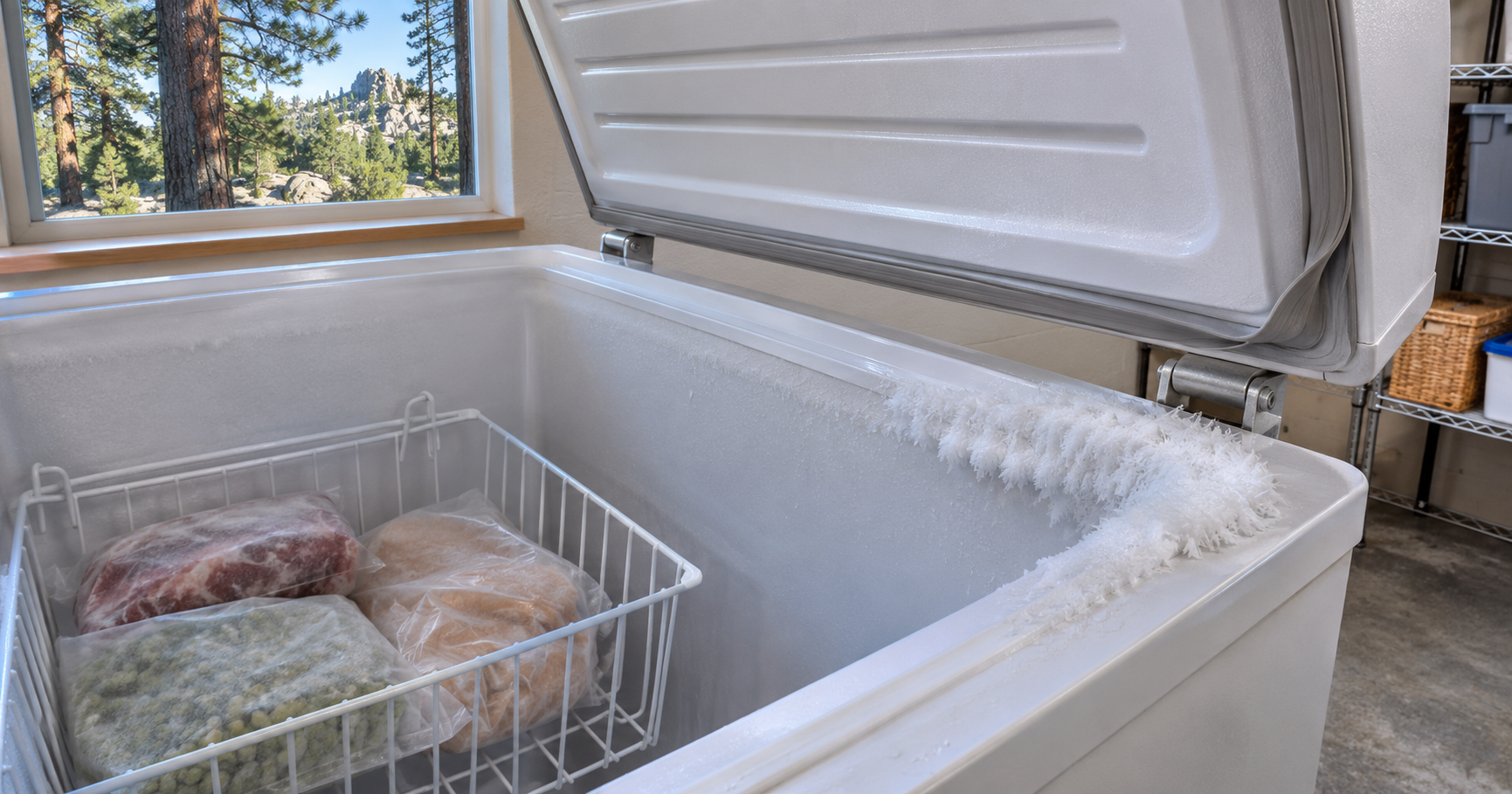

A deep freezer is one of the most useful appliances in a Prescott, AZ, home, especially when you rely on it to store bulk groceries, frozen meals, or extra food for your family. However, when your freezer starts making strange noises, developing excessive frost, or struggling to maintain the right temperature, those problems can quickly become frustrating and expensive.
Common deep freezer problems include inadequate cooling, excessive frost buildup, unusual noises, water leaks, damaged door seals, and electrical failures. Some issues can be resolved with basic maintenance, while others require professional appliance repair to prevent food spoilage or further equipment damage.
Prescott homeowners should recognize several important warning signs:
-
A deep freezer that runs continuously may have dirty condenser coils, a faulty door gasket, or a temperature control problem.
-
Excessive frost buildup can indicate an air leak, particularly when warm, humid air enters the freezer during Arizona’s summer monsoon season.
-
Unusual clicking, buzzing, or grinding noises may signal problems with the compressor, fan motor, or electrical components.
-
A freezer located in an unconditioned Prescott garage may struggle during temperature extremes, depending on its operating specifications.
-
Food that becomes soft or partially thawed may indicate a cooling problem requiring prompt attention.
Prescott’s elevation, seasonal temperature fluctuations, and dry climate create operating conditions that homeowners should consider when maintaining their appliances. Understanding how these factors affect freezer performance can help you identify problems early.
At Affordable Appliance Repair, we understand how inconvenient appliance problems can be for local households. Knowing when to perform basic troubleshooting and when to request professional assistance can help protect your stored food and extend the useful life of your freezer.
Why Is My Deep Freezer Not Cooling Properly?
A deep freezer that is not cooling properly may have a damaged door seal, restricted airflow, dirty condenser coils, a malfunctioning thermostat, or a problem with its refrigeration system. Prescott homeowners should first check the temperature setting, power supply, and door closure before considering more complicated repairs.
A properly operating freezer should generally maintain a temperature of 0°F or lower for safe long-term frozen food storage.
If your freezer cannot reach or maintain this temperature, several components may be responsible.
Dirty Condenser Coils
Condenser coils help release heat from the refrigeration system. When accessible coils become covered with dust, dirt, or pet hair, the freezer may have difficulty releasing heat efficiently.
Dust accumulation can be particularly relevant in Prescott Valley, Williamson Valley, and other parts of Yavapai County where dry conditions and wind can contribute to household dust.
Some freezers have accessible condenser coils that can be cleaned according to the manufacturer’s instructions. Others use enclosed designs that do not require routine coil cleaning.
Faulty Thermostat or Temperature Sensor
The thermostat or electronic temperature sensor helps regulate cooling.
If the control system malfunctions, the freezer may stop cooling at the appropriate temperature or run longer than necessary.
A freezer thermometer can help determine whether the appliance is maintaining the correct temperature.
Compressor or Refrigeration System Problems
The compressor circulates refrigerant through the cooling system.
If the compressor fails to start, runs continuously without adequate cooling, or makes repeated clicking sounds, professional diagnosis may be necessary.
Refrigeration system repairs involve specialized components and should not be attempted without appropriate training.
What Causes Excessive Frost Buildup in a Deep Freezer?
Excessive frost buildup usually occurs when warm, moisture-containing air enters the freezer and freezes on cold interior surfaces. Damaged door gaskets, improperly closed lids, frequent openings, and defrost system problems are common causes. Prescott’s summer monsoon season can make moisture-related frost problems more noticeable.
Some frost accumulation is normal in manual-defrost freezers. However, thick ice buildup can reduce usable storage space and interfere with proper door closure.
Damaged Door Gaskets
The rubber gasket around a freezer door or lid creates a seal that helps keep cold air inside.
Over time, the gasket may become brittle, cracked, loose, or distorted.
A simple way to check the seal is to close the door on a piece of paper. If the paper slides out with very little resistance, the gasket may not be sealing properly in that location.
Repeat the test around several areas of the door.
Frequent Door Openings
Every time a freezer opens, warmer air can enter.
This is especially relevant during busy summer weekends when Prescott households frequently access frozen foods for outdoor gatherings and family meals.
Organizing food into labeled containers can reduce the amount of time the freezer remains open.
Defrost System Malfunctions
Frost-free upright freezers typically use automatic defrost components to control ice accumulation.
A malfunctioning defrost heater, sensor, or control board may allow frost to accumulate around internal cooling components.
If ice returns quickly after a proper defrost, professional troubleshooting may be needed.
Never use sharp tools to chip away ice because puncturing a refrigerant line can permanently damage the appliance.
Why Is My Deep Freezer Making Strange Noises?
Unusual deep freezer noises can indicate problems with the compressor, fan motor, start relay, or internal components. While occasional humming, clicking, and refrigerant movement sounds are normal, persistent grinding, loud buzzing, repeated clicking, or new vibrations may indicate a mechanical problem.
Prescott homeowners should pay attention to when the noise occurs and whether cooling performance changes at the same time.
Loud Buzzing
A low humming or buzzing sound is normal while the compressor operates.
However, unusually loud buzzing may indicate a struggling compressor, loose component, or electrical issue.
If the buzzing is accompanied by poor cooling, the freezer should be inspected.
Repeated Clicking
Occasional clicking may occur during normal operating cycles.
Repeated clicking followed by an unsuccessful attempt to start can indicate a compressor start relay or related electrical problem.
Unplugging and repeatedly restarting the appliance is not a reliable repair method.
Grinding or Rattling
Grinding sounds in an upright freezer may indicate a problem with an evaporator fan.
Rattling can sometimes result from loose exterior panels, items touching the cabinet, or an uneven installation surface.
Check for obvious external vibration sources before assuming a major component has failed.
What Are the Warning Signs of a Failing Deep Freezer?
The most common warning signs of a failing deep freezer include inconsistent temperatures, excessive frost, unusual noises, water accumulation, frequent cycling, electrical problems, and food that no longer remains completely frozen. Recognizing these symptoms early can help Prescott residents avoid losing large quantities of stored food.
Watch for these seven warning signs:
-
Soft or partially thawed food: Frozen products begin losing their firmness even though the temperature setting has not changed.
-
Excessive ice accumulation: Thick frost develops around the walls, lid, shelves, or door.
-
Continuous operation: The compressor appears to run almost constantly without maintaining the desired temperature.
-
Unusual sounds: Repeated clicking, grinding, or unusually loud buzzing develops during operation.
-
Water around the appliance: Puddles form beneath or near the freezer because of melting ice, condensation, or drainage problems.
-
Frequent electrical interruptions: The freezer repeatedly trips a circuit breaker or loses power.
-
Unusual odors: Spoiled food, standing water, or an electrical malfunction produces an unfamiliar smell.
Electrical warning signs deserve particular attention.
If you notice smoke, sparks, a burning smell, or a damaged power cord, stop using the freezer and arrange appropriate professional assistance.
Do not continue resetting a breaker that repeatedly trips.
How Does Prescott’s Climate Affect Deep Freezer Performance?
Prescott’s climate can affect deep freezer performance through seasonal temperature changes, airborne dust, and increased humidity during the summer monsoon season. Freezers installed in garages, workshops, or other unconditioned spaces may experience more demanding operating conditions than appliances kept inside temperature-controlled homes.
Summer Heat and Garage Freezers
Garages in Prescott and nearby Prescott Valley can become considerably warmer than indoor living spaces during summer.
When surrounding temperatures rise, a freezer may need to operate longer to maintain its internal temperature.
Not every freezer is designed for garage installation.
Homeowners should check the manufacturer’s approved ambient temperature range before placing an appliance in an unconditioned space.
A garage-ready model may be better suited to locations that experience significant temperature changes.
Winter Temperature Fluctuations
Prescott experiences colder winter conditions than many lower-elevation Arizona communities.
During particularly cold weather, some freezers installed in unheated spaces may operate outside their recommended temperature range.
Certain refrigerator-freezer combinations are especially sensitive to low ambient temperatures because of how their temperature controls operate.
Always follow the manufacturer’s placement recommendations.
Dust and Airflow Restrictions
Dry conditions throughout Yavapai County can contribute to dust accumulation around appliances.
A freezer surrounded by boxes, storage bins, or other household items may also have insufficient ventilation.
Maintaining the manufacturer’s recommended clearances can help the refrigeration system release heat effectively.
What Should You Check Before Calling for Deep Freezer Repair?
Before requesting deep freezer repair in Prescott, check the power connection, temperature setting, door seal, ventilation clearance, and actual internal temperature. These basic troubleshooting steps can help identify simple problems without opening electrical compartments or attempting complicated mechanical repairs.
Start by confirming that the appliance is receiving power.
Inspect the outlet and power cord for visible damage without touching exposed wiring. Avoid extension cords and power strips unless the appliance manufacturer specifically permits their use.
Next, check the temperature control.
A setting may have been accidentally changed while moving food or cleaning the appliance.
Place an appliance thermometer inside the freezer to measure its temperature. Allow sufficient time for the reading to stabilize.
Inspect the door gasket for food debris, cracks, or areas that prevent a tight seal.
Finally, check that the appliance has adequate ventilation and that the lid or door closes completely.
If the freezer continues to warm, makes abnormal mechanical noises, or develops electrical problems, professional diagnosis is the safer next step.
When Should You Repair or Replace a Deep Freezer?
Repairing a deep freezer generally makes sense when the appliance is in otherwise good condition and the repair cost is reasonable compared with replacement. Replacing it may be more practical when the freezer is older, has recurring failures, or requires expensive refrigeration system repairs.
For Prescott homeowners, the decision should consider the freezer’s age, capacity, energy efficiency, repair history, and replacement cost.
A damaged door gasket or faulty temperature control may be relatively straightforward to repair.
A failed compressor or significant sealed-system problem can involve considerably more labor and expense.
The amount of food stored in the appliance also matters.
A large chest freezer used for bulk meat storage may justify prompt professional diagnosis because an extended cooling failure can result in substantial food loss.
Before making a decision, ask for an explanation of the suspected problem and the estimated repair cost.
At Affordable Appliance Repair, we encourage homeowners to consider the overall condition of their appliances when evaluating repair options.
How Can Prescott Homeowners Prevent Common Deep Freezer Problems?
Prescott homeowners can prevent many common deep freezer problems by maintaining proper ventilation, inspecting door seals, monitoring temperatures, removing excessive frost, and following the manufacturer’s maintenance recommendations. Seasonal checks are particularly useful before summer heat and winter temperature changes place additional demands on appliances in unconditioned spaces.
Keep the Freezer at the Correct Temperature
Maintain an internal temperature of 0°F or below.
Use a separate appliance thermometer when the freezer does not have a reliable digital temperature display.
Inspect the Door Seal Regularly
Clean food residue and debris from the gasket using a manufacturer-approved cleaning method.
Look for cracks, gaps, and areas where the seal no longer contacts the cabinet properly.
Defrost Manual-Defrost Models
Follow the manufacturer’s instructions for defrosting when ice becomes excessive.
Never use knives, screwdrivers, or other sharp objects to remove frost.
Maintain Proper Airflow
Avoid placing storage containers directly against ventilation openings.
Keep the recommended clearance around the appliance, especially when it is installed in a garage or utility room.
Prepare for Seasonal Weather
Before Prescott’s summer monsoon season, check that the freezer closes securely and maintains its set temperature.
During winter, verify that garage installations remain within the manufacturer’s recommended operating conditions.
These simple habits can help reduce unnecessary wear and identify problems before they become more serious.
Common Deep Freezer Mistakes That Can Lead to Bigger Repairs
Common deep freezer maintenance mistakes include ignoring temperature changes, forcing the lid closed, removing ice with sharp tools, blocking ventilation, and repeatedly resetting electrical components. These actions can turn manageable issues into more expensive problems for Prescott households.
One frequent mistake is assuming that a freezer is working correctly simply because its compressor is running.
A running compressor does not necessarily mean the appliance is maintaining a safe temperature.
The better approach is to monitor the internal temperature with a thermometer.
Another mistake is overpacking an upright freezer until food blocks internal air circulation or prevents the door from closing.
Organizing frozen items and respecting the manufacturer’s storage recommendations can help maintain proper operation.
Homeowners should also avoid using space heaters, hair dryers, or other uncontrolled heat sources to speed up defrosting.
These methods can damage plastic components, insulation, and electrical parts.
Proper maintenance is generally safer and less expensive than attempting improvised repairs.
A Common Deep Freezer Problem in Prescott Garages
A common local scenario involves a chest freezer installed in a garage that begins running longer during Prescott’s warmer months. The homeowner notices that the exterior feels warmer than usual and that frozen food is not staying as firm as expected.
Several conditions could contribute to this problem.
The garage may be warmer than the freezer’s recommended operating range. Storage boxes may restrict ventilation, or dust may have accumulated around accessible cooling components.
The door gasket may also be allowing warm air inside.
In this situation, the homeowner should check the appliance’s temperature, installation clearances, and manufacturer specifications.
If the freezer remains too warm after these basic checks, a professional inspection can help determine whether a component has failed.
This example illustrates why garage placement and seasonal maintenance deserve attention in the Prescott area.
How Much Can Ignoring a Deep Freezer Problem Cost?
Ignoring a deep freezer problem can result in spoiled food, increased electricity consumption, additional component wear, and potentially more expensive repairs. The total financial impact depends on the appliance’s condition, the type of malfunction, and the quantity of food stored inside.
For households that purchase meat and groceries in bulk, losing an entire freezer’s contents can be especially costly.
A freezer that runs continuously may also use more electricity than necessary.
Some problems, such as damaged door gaskets or blocked ventilation, may worsen over time if left unaddressed.
If food begins thawing, prioritize food safety rather than waiting for the appliance to recover.
According to USDA food safety guidance, frozen food that still contains ice crystals or remains at 40°F or below may generally be safely refrozen or cooked. Perishable food that has been above 40°F for more than two hours should be discarded.
Never taste food to determine whether it is safe.
Addressing cooling problems promptly can help reduce unnecessary food loss and prevent avoidable appliance damage.
Frequently Asked Questions About Deep Freezer Problems in Prescott, AZ
Why Is My Deep Freezer Running Constantly in Prescott?
A deep freezer may run constantly because of high surrounding temperatures, a damaged door gasket, dirty accessible condenser coils, or a malfunctioning temperature control. Prescott garage installations can experience additional strain during summer. Check the internal temperature and ventilation before requesting professional diagnosis.
Is It Safe to Keep a Deep Freezer in a Prescott Garage?
A deep freezer can be kept in a Prescott garage if the manufacturer approves the appliance for the temperatures expected in that space. Garage-ready models are designed for broader ambient temperature ranges. Check the product specifications because both summer heat and winter cold can affect performance.
Why Does My Freezer Have More Frost During Arizona’s Monsoon Season?
Increased frost during Arizona’s monsoon season may occur because humid outdoor air enters through an improperly sealed door or lid. Moisture freezes when it contacts cold interior surfaces. Inspect the gasket, minimize unnecessary openings, and follow the manufacturer’s defrosting instructions.
How Often Should I Check My Deep Freezer Temperature?
Deep freezer temperatures should be checked regularly, especially when the appliance is located in an unconditioned garage or has previously experienced cooling problems. A freezer thermometer provides an independent reading. Aim for 0°F or below and investigate unexplained temperature increases.
Can a Deep Freezer Be Repaired if It Stops Freezing?
Many deep freezers can be repaired when cooling failures involve replaceable components such as thermostats, start relays, door gaskets, or certain fan motors. Compressor and sealed-system problems may be more expensive. A professional diagnosis can help determine whether repair or replacement is more practical.
What Should I Do if My Freezer Stops Working During a Prescott Power Outage?
Keep the freezer door closed during a Prescott power outage to preserve cold temperatures. According to USDA guidance, a full freezer generally maintains a safe temperature for approximately 48 hours if unopened, while a half-full freezer lasts about 24 hours. Check food temperatures and condition when power returns.
Why Is Water Collecting Under My Chest Freezer?
Water collecting beneath a chest freezer may result from melting frost, a loose drain plug, condensation, or a cooling failure. Prescott homeowners should check for obvious drainage problems and monitor the internal temperature. Persistent leaking or thawing may require professional inspection.
How Long Should a Deep Freezer Last in Yavapai County?
A deep freezer may last roughly 10 to 20 years, although actual service life varies with the model, maintenance, installation environment, and frequency of use. Yavapai County homeowners can support appliance longevity by maintaining ventilation, monitoring temperatures, and addressing unusual operation promptly.
Get Reliable Deep Freezer Repair Help in Prescott, AZ
A malfunctioning deep freezer can disrupt your household routine, increase energy consumption, and put valuable frozen food at risk. Recognizing warning signs such as excessive frost, inconsistent cooling, unusual noises, and electrical problems can help you decide when professional service is necessary.
At Affordable Appliance Repair, we understand the importance of keeping household appliances operating reliably. Whether you are dealing with a freezer that will not cool, a damaged seal, or an unexplained mechanical problem, we can help you explore the next steps toward restoring dependable performance.
Contact Affordable Appliance Repair to discuss your deep freezer problem and request appliance repair assistance in Prescott, AZ.