
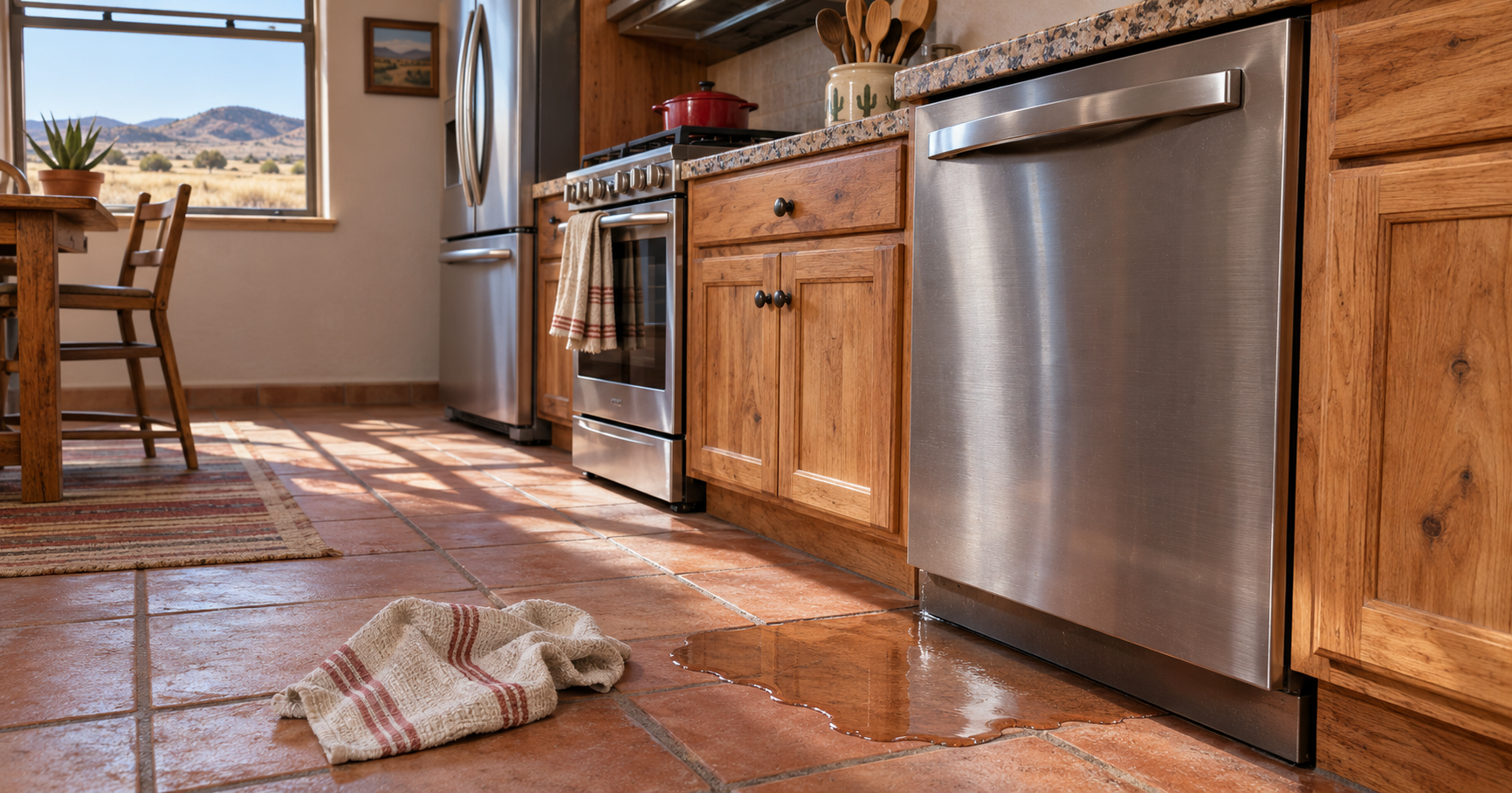

A broken refrigerator, a washing machine that will not drain, or an oven that refuses to heat can quickly disrupt your daily routine. For homeowners in Chino Valley, AZ, appliance problems can be particularly frustrating when household equipment is exposed to seasonal temperature changes, mineral-rich water, and everyday wear.
The five common appliance issues homeowners should watch for are refrigerators that stop cooling properly, washing machines that fail to drain, dryers that take too long to dry clothes, dishwashers that leave dishes dirty, and ovens that heat unevenly. Recognizing these problems early can help prevent additional damage, reduce repair costs, and extend the useful life of household appliances.
Chino Valley residents should keep several factors in mind when maintaining their appliances:
-
Hard water can contribute to mineral buildup inside dishwashers, washing machines, and other water-using appliances.
-
Dust and debris common in Central Arizona can accumulate around appliance ventilation systems and accessible components.
-
Refrigerators may experience additional cooling demands during hot summer weather, particularly in poorly ventilated spaces.
-
Regular cleaning and maintenance can help prevent certain mechanical problems from becoming expensive repairs.
-
Professional appliance repair can often restore equipment without requiring homeowners to purchase an entirely new appliance.
At Affordable Appliance Repair, we understand how inconvenient appliance problems can be for local households. Knowing which warning signs deserve attention can help homeowners make informed decisions about maintenance, repairs, and replacement.
1. Refrigerator Not Cooling Properly
A refrigerator that is not cooling properly may have dirty condenser coils, damaged door seals, restricted airflow, or a malfunctioning cooling component. In Chino Valley, AZ, warm summer temperatures can make refrigeration problems especially noticeable, particularly when refrigerators are installed in garages or other spaces without adequate climate control.
Refrigerators work by removing heat from their interiors and releasing it into the surrounding environment. When airflow is restricted or cooling components malfunction, the appliance may struggle to maintain a safe food storage temperature.
Common Signs of Refrigerator Problems
Several warning signs suggest that a refrigerator needs attention:
-
Food spoils faster than expected despite being stored correctly.
-
The refrigerator runs almost continuously without maintaining the proper temperature.
-
Water collects beneath the appliance or inside its compartments.
-
Unusual clicking, buzzing, or rattling sounds become more frequent.
-
Frost accumulates excessively in the freezer.
-
The refrigerator compartment feels warm while the freezer remains cold.
For households throughout Yavapai County, refrigerator problems can lead to wasted groceries and unnecessary expenses.
What Causes Refrigerator Cooling Problems?
Dirty condenser coils are one possible cause. When dust and debris accumulate on the coils, heat transfer becomes less efficient. Other potential problems include damaged door gaskets, faulty fans, defrost system failures, and thermostat or sensor malfunctions.
Homeowners can begin by checking that the refrigerator doors close completely and that food containers are not blocking interior vents. Cleaning accessible condenser coils according to the manufacturer’s instructions may also improve performance.
Refrigerators should generally maintain temperatures at or below 40°F, while freezers should remain at 0°F. A separate appliance thermometer can help verify temperatures.
If cooling problems continue, professional diagnosis is the safest next step. Refrigerant leaks, electrical faults, and sealed-system repairs should not be attempted without appropriate training.
2. Washing Machine Not Draining or Spinning
A washing machine that will not drain or spin may have a blocked drain hose, clogged pump filter, unbalanced load, or malfunctioning mechanical component. In Chino Valley, mineral deposits from hard water can also contribute to maintenance concerns, although they are not necessarily the cause of every drainage problem.
A washing machine that stops working properly can leave homeowners with soaking-wet laundry and standing water inside the drum.
Warning Signs of Washing Machine Trouble
Common symptoms include:
-
Water remains inside the washing machine after the cycle finishes.
-
Clothes come out excessively wet.
-
The machine produces grinding or humming noises.
-
The drum does not spin consistently.
-
The appliance shakes excessively during operation.
-
Wash cycles stop unexpectedly or display error codes.
These symptoms can result from several different mechanical or electrical issues.
Common Causes of Drainage and Spin Problems
A clogged drain pump filter is one possible explanation. Small objects, lint, and debris can obstruct water flow, preventing the appliance from draining correctly.
A kinked or blocked drain hose can create similar symptoms.
Other potential causes include worn drive components, defective lid switches or door locks, motor problems, and electronic control failures.
Homeowners in Prescott Valley, Paulden, and surrounding communities may also encounter mineral deposits in water-using appliances, depending on their household water supply.
Regular maintenance can help reduce buildup and improve appliance performance.
Before inspecting an accessible filter, homeowners should turn off and unplug the appliance, follow the manufacturer’s instructions, and prepare for any remaining water.
If the machine continues to malfunction after basic checks, professional service can help identify the underlying problem without unnecessary part replacement.
3. Dryer Taking Too Long to Dry Clothes
A dryer that takes multiple cycles to dry clothing often has restricted airflow, an overloaded drum, a clogged lint screen, or a heating system problem. For Chino Valley homeowners, dryer maintenance is especially important because lint accumulation can reduce efficiency and create a potential fire hazard.
A properly functioning dryer should remove moisture efficiently without overheating clothing or surrounding surfaces.
Signs Your Dryer Needs Attention
Watch for these common symptoms:
-
Clothes remain damp after a normal drying cycle.
-
The dryer becomes unusually hot during operation.
-
Laundry takes progressively longer to dry.
-
The appliance shuts off before the cycle finishes.
-
Burning odors develop while the dryer operates.
-
The exterior vent produces weak airflow.
Dryer problems should never be ignored when unusual heat or burning smells are present.
Why Dryers Lose Efficiency
Restricted ventilation is one of the most common explanations for extended drying times.
Lint can accumulate inside the exhaust duct, around vent connections, or near the exterior termination point. Even when the lint screen is cleaned regularly, additional buildup can develop elsewhere in the ventilation system.
Heating element failures, malfunctioning thermostats, defective moisture sensors, and worn mechanical components can also interfere with drying performance.
For households in Central Arizona, dust and outdoor debris can contribute to ventilation maintenance needs.
Homeowners should clean the lint screen after every load and periodically inspect accessible exterior vent openings.
If drying times remain excessive, professional inspection may be necessary to determine whether the problem involves ventilation, heating components, or electrical controls.
A dryer producing a burning smell should be turned off immediately and left unused until the cause has been identified.
4. Dishwasher Not Cleaning Dishes Properly
A dishwasher that leaves dishes dirty may have clogged spray arms, a blocked filter, insufficient water circulation, or a heating problem. In Chino Valley, hard water can contribute to mineral deposits that affect cleaning performance and leave cloudy residue on dishes and glassware.
Dishwashers depend on adequate water flow, appropriate detergent, and properly functioning components to clean dishes effectively.
Common Dishwasher Warning Signs
Homeowners may notice:
-
Food particles remain on dishes after a complete wash cycle.
-
Glassware develops cloudy spots or mineral residue.
-
Water collects at the bottom of the dishwasher.
-
Unusual grinding or humming sounds occur.
-
Dishes remain wet after the drying cycle.
-
The dishwasher develops persistent unpleasant odors.
Some of these issues can be resolved through routine cleaning, while others require mechanical repairs.
How Hard Water Affects Dishwashers
Water hardness varies by property and water source, but mineral-rich water is a common concern throughout parts of Arizona.
Calcium and magnesium deposits can accumulate on interior surfaces and components, potentially reducing cleaning efficiency over time.
Mineral buildup may also interfere with spray openings and contribute to visible residue.
Homeowners can help maintain dishwasher performance by cleaning the filter, checking accessible spray arms, using the recommended detergent, and following manufacturer guidance for rinse aids or dishwasher cleaners.
Proper loading also matters. Large dishes and cookware should not obstruct the spray arms.
If the dishwasher continues leaving dirty dishes despite regular cleaning, the problem may involve the circulation pump, water inlet valve, heating system, or electronic controls.
Professional diagnosis can help determine whether a repair is practical.
5. Oven or Stove Not Heating Evenly
An oven that heats unevenly may have a malfunctioning heating element, faulty temperature sensor, damaged door seal, or calibration problem. In Chino Valley homes, these issues can interfere with everyday cooking, baking, and holiday meal preparation.
Uneven heating can cause food to cook inconsistently, increase cooking times, and make temperature-sensitive recipes difficult to prepare.
Signs of Oven and Stove Problems
Common warning signs include:
-
Food cooks unevenly despite following recommended temperatures.
-
The oven takes longer than usual to preheat.
-
Electric burners fail to heat consistently.
-
The oven temperature differs significantly from the selected setting.
-
The appliance displays error codes.
-
Gas burners have difficulty igniting or maintaining a stable flame.
An occasional difference between the selected temperature and an oven thermometer reading does not automatically indicate a serious malfunction. Ovens cycle their heating systems to maintain average temperatures.
However, persistent temperature problems deserve investigation.
Common Causes of Heating Problems
Electric ovens typically rely on heating elements, sensors, and control components to regulate temperature.
If a heating element fails, the oven may struggle to reach the selected temperature or distribute heat appropriately.
Gas ovens can experience ignition system problems, burner issues, or temperature regulation failures.
Damaged door gaskets can also allow heat to escape, potentially increasing cooking times.
Homeowners can inspect visible door seals, confirm that cookware is positioned correctly, and compare temperature readings using an oven-safe thermometer.
Electrical repairs, gas valve work, and ignition system repairs should be handled by qualified professionals.
If you smell gas, leave the area immediately, avoid operating electrical switches or appliances, and contact the gas utility or emergency services from a safe location.
Why Appliance Problems Matter for Chino Valley Homeowners
Appliance problems can affect household expenses, energy consumption, convenience, and safety. For homeowners in Chino Valley and surrounding Yavapai County communities, addressing equipment problems promptly can help limit unnecessary disruptions and prevent certain minor issues from developing into larger repairs.
Local environmental conditions can also influence maintenance needs.
Seasonal Temperature Changes
Chino Valley experiences warm summers and cold winter nights. Appliances located in garages, utility rooms, or other areas with limited climate control may operate under different conditions than equipment installed inside conditioned living spaces.
For example, some refrigerators are not designed to function properly in extremely hot or cold garages.
Homeowners should review manufacturer temperature requirements before installing appliances in these locations.
Mineral Buildup
Households using mineral-rich water may notice deposits on dishwasher interiors, washing machine components, and other surfaces exposed to water.
Regular cleaning and appropriate water treatment can help manage certain mineral-related problems.
Dust and Ventilation
Dry conditions and airborne dust can increase the importance of cleaning accessible ventilation areas.
Refrigerator condenser coils and dryer exhaust systems are two areas where accumulated debris can affect performance.
These conditions do not mean every appliance problem is caused by the local environment. However, they make consistent maintenance especially valuable.
When Should You Call a Professional for Appliance Repair?
Professional appliance repair is appropriate when an appliance repeatedly malfunctions, develops unusual electrical or mechanical symptoms, leaks water, or presents a potential safety hazard. Homeowners in Chino Valley should seek qualified assistance when basic manufacturer-approved maintenance does not resolve the problem.
Some tasks are reasonable for homeowners to perform independently.
Cleaning lint screens, checking door seals, removing accessible dishwasher filters, and confirming that appliances receive power are examples of basic troubleshooting.
However, attempting complex repairs without the necessary knowledge can create additional problems.
Professional service is particularly appropriate when:
-
Electrical components appear damaged or produce burning odors.
-
A refrigerator cannot maintain safe food storage temperatures.
-
A washing machine leaks from an unidentified location.
-
A dryer overheats or repeatedly shuts off.
-
An oven has ignition problems or fails to regulate temperature.
-
An appliance continues displaying error codes after basic troubleshooting.
At Affordable Appliance Repair, we encourage homeowners to address recurring symptoms before continuing to operate malfunctioning equipment.
A professional assessment can help determine whether the appliance needs a replacement component, adjustment, cleaning, or more extensive repair.
How to Prevent Common Appliance Problems in Chino Valley
Preventing common appliance problems starts with routine cleaning, proper appliance use, and attention to early warning signs. Chino Valley homeowners can reduce avoidable wear by following manufacturer maintenance schedules and adjusting certain household routines to account for local dust, water conditions, and seasonal temperatures.
Keep Refrigerator Coils and Vents Clean
Check the manufacturer’s instructions for condenser coil cleaning intervals.
Remove accessible dust and debris, and avoid placing objects where they obstruct ventilation.
Make sure refrigerator doors close completely and that door gaskets remain clean.
Maintain Washing Machine Components
Avoid overloading the washing machine and use the recommended amount of detergent.
Clean accessible filters when required by the manufacturer, and inspect water supply hoses periodically for cracks, bulges, or leaks.
For homes with hard water, follow appliance-specific recommendations for controlling mineral buildup.
Clean Dryer Lint Screens and Exhaust Vents
Remove lint from the screen after every load.
Periodically inspect the exterior exhaust opening and arrange for duct cleaning when buildup or restricted airflow is suspected.
Avoid crushing flexible ducts behind the appliance.
Clean Dishwasher Filters and Spray Arms
Remove food debris from accessible filters and inspect spray arms for blockages.
Use dishwasher cleaning products only as directed by the manufacturer.
If mineral residue is a recurring concern, consider testing household water hardness before choosing a treatment method.
Check Oven Performance
Inspect door gaskets for visible damage and clean spills according to manufacturer instructions.
If cooking temperatures become inconsistent, use an oven-safe thermometer to help identify a persistent pattern.
Do not disassemble electrical or gas components without appropriate training.
Consistent maintenance does not eliminate every appliance failure, but it can help homeowners identify developing problems sooner.
Should You Repair or Replace a Broken Appliance?
Repairing a broken appliance often makes sense when the problem is limited to a replaceable component and the overall equipment remains in good condition. Replacement may be more practical when repair costs are high, major components have failed, or the appliance has experienced repeated breakdowns.
For homeowners in Chino Valley, the decision should consider the appliance’s age, condition, repair estimate, energy efficiency, and replacement cost.
A relatively new washing machine with a clogged drain pump may be worth repairing.
An older refrigerator with a major sealed-system failure could require a more detailed cost comparison.
Similarly, a dryer with a worn belt may be a reasonable repair candidate, while an appliance with multiple major failures may be less economical to maintain.
Homeowners should also consider whether replacement requires additional expenses, such as delivery, installation, removal of the old appliance, or modifications to the surrounding space.
Before deciding, ask for a diagnosis and estimate that clearly identifies the problem.
Our goal is to help homeowners understand their repair options so they can make practical decisions about their household equipment.
Common Appliance Repair Mistakes to Avoid
Common appliance repair mistakes include ignoring early symptoms, replacing parts without a diagnosis, using inappropriate cleaning products, and continuing to operate unsafe equipment. In Chino Valley, avoiding these mistakes can help homeowners reduce unnecessary expenses and protect their appliances from additional damage.
One mistake is assuming that a refrigerator needs replacement as soon as it stops cooling properly. Dirty coils, blocked vents, and damaged door seals can sometimes produce similar symptoms.
Another is repeatedly running a dryer that requires multiple cycles. Continuing to use equipment with restricted ventilation may increase energy consumption and create safety concerns.
Homeowners may also attempt to clear dishwasher mineral deposits using harsh chemicals that are not approved for their appliance. These products can damage certain materials or components.
A better approach is to begin with manufacturer-approved troubleshooting and seek professional service when symptoms persist.
Avoid purchasing expensive replacement parts based solely on an online symptom description. Different component failures can produce similar warning signs, making accurate diagnosis essential.
Frequently Asked Questions About Appliance Repair in Chino Valley, AZ
What is the most common appliance problem in Chino Valley, AZ?
Refrigerator cooling problems, washing machine drainage issues, dryer ventilation restrictions, dishwasher cleaning failures, and oven heating problems are all common categories of household appliance trouble. The most frequent problem for an individual household depends on appliance age, maintenance habits, installation conditions, and equipment usage.
Can hard water damage appliances in Chino Valley?
Yes, hard water can contribute to mineral buildup inside dishwashers, washing machines, and other water-using appliances. Over time, deposits may affect cleaning performance or certain components. Water hardness varies by property, so testing the household water supply can help determine whether additional maintenance or treatment is appropriate.
How often should I clean my refrigerator coils in Arizona?
Refrigerator coils should be cleaned according to the manufacturer’s recommendations, often approximately every six to twelve months. Homes with pets or significant dust accumulation may require more frequent attention. Chino Valley homeowners should also make sure the appliance has adequate ventilation, particularly during warmer months.
Why does my dryer take longer to dry clothes during certain seasons?
Longer drying times can result from restricted ventilation, large loads, high initial moisture levels, or malfunctioning heating components. Seasonal humidity can also influence drying conditions, although indoor vented dryers should operate consistently when maintained properly. Persistent drying problems warrant an inspection rather than repeated extended cycles.
Is it worth repairing an older refrigerator in Chino Valley?
Repairing an older refrigerator may be worthwhile when the problem is relatively inexpensive to correct and the appliance remains otherwise reliable. Major cooling system failures can change that calculation. Compare the repair estimate with the cost of a suitable replacement, including delivery, installation, and potential energy savings.
Can I repair my dishwasher myself?
Homeowners can often perform basic dishwasher maintenance, such as cleaning accessible filters, checking spray arms, and confirming proper loading. Repairs involving electrical wiring, internal pumps, water connections, or electronic controls may require professional assistance. Always disconnect power before performing maintenance that requires access to internal components.
What should I do if my washing machine starts leaking?
Turn off the washing machine and stop the water supply if it is safe to do so. Check visible supply hoses and connections for obvious damage. If the source is unclear or water continues escaping, avoid operating the appliance until the problem has been diagnosed and repaired.
Do appliance problems get worse during Arizona summers?
Some appliance problems become more noticeable during Arizona summers, especially refrigerator cooling issues in hot or poorly ventilated spaces. Higher surrounding temperatures can increase refrigeration demands. However, summer weather does not explain every malfunction, and persistent performance problems should be evaluated based on their specific symptoms.
How quickly should I schedule appliance repair?
Schedule appliance repair promptly when equipment repeatedly malfunctions, leaks, overheats, or fails to maintain necessary temperatures. Problems involving burning odors, suspected gas leaks, or electrical hazards require immediate safety precautions. Minor performance concerns may allow time for basic troubleshooting, but delaying repairs can sometimes lead to additional damage.
Get Reliable Appliance Repair in Chino Valley, AZ
Keeping household appliances in good working condition helps protect your time, budget, and daily routine. Whether you live in Chino Valley or a nearby community such as Prescott, Prescott Valley, or Paulden, recognizing early warning signs can help you avoid unnecessary inconvenience.
At Affordable Appliance Repair, we understand how important dependable household equipment is to everyday life. From refrigerator cooling concerns to washing machine drainage problems and inconsistent oven temperatures, we can help you explore practical repair solutions.
If your appliance is making unusual noises, operating inefficiently, or no longer working as expected, contact Affordable Appliance Repair to discuss your concerns and request service in Chino Valley, AZ.